Viime aikoina olen kohdannut itseni lisäksi muita ihmisiä, jotka kysyvät itseltään, onko yhteisyyden puute minun vikani. Niin minä kuin muutkin ovat miettineet sitä, olisinko jossain muualla vähemmän yksin. Tässä myllerryksessä mieleeni on tullut ystäväni sanat, että kun ihminen on sinut itsensä kanssa, hän on kotonaan, vaikka rotankolossa. Hänen mukaansa muutos parempaan alkaa itsensä palkitsemisesta. Olen tämän tien kulkija loppuun asti niin kuin jokainen meistä. Syyllisen hakeminen meistä itsestämme tai muista ei meitä auta. Ajatuksien pyöritteleminen sai minut kirjoittamaan seuraavan runon.
Recently, I have encountered other people besides myself who ask themselves if the lack of commonality is my fault. I and others have wondered if I would be less alone elsewhere. In this turmoil, my friend’s words have come to mind that when a person is at peace with himself, he is at home, even in a rat hole. According to him, the change for the better starts with rewarding yourself. I am a traveler on this road until the end, like each of us. Blaming ourselves or others does not help us. Rolling my thoughts led me to write the following poem.
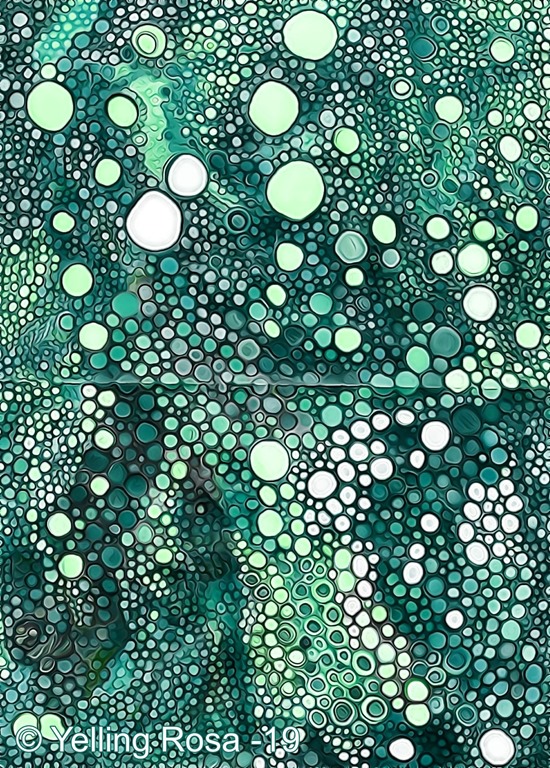
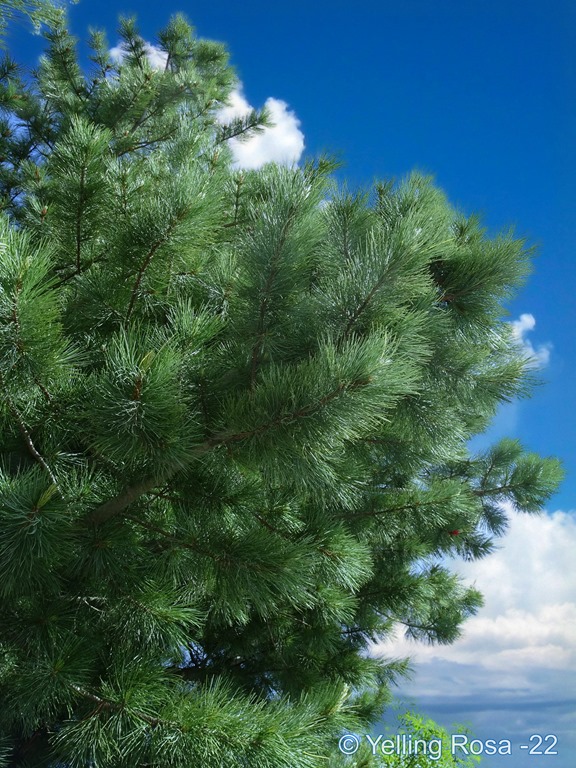
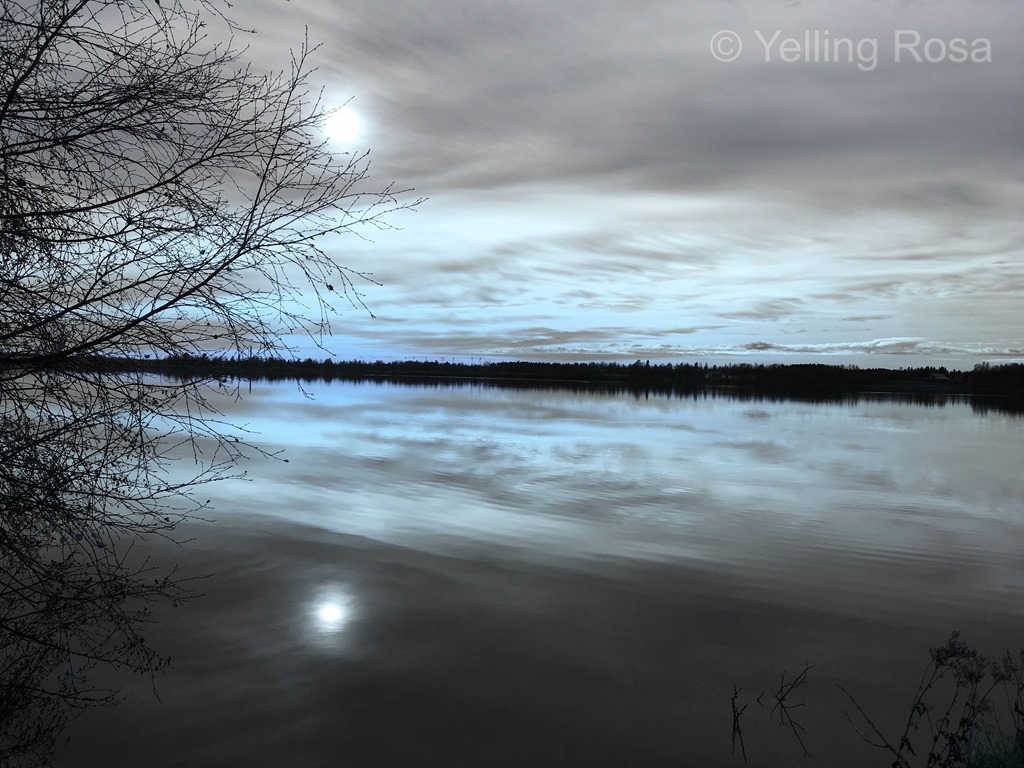
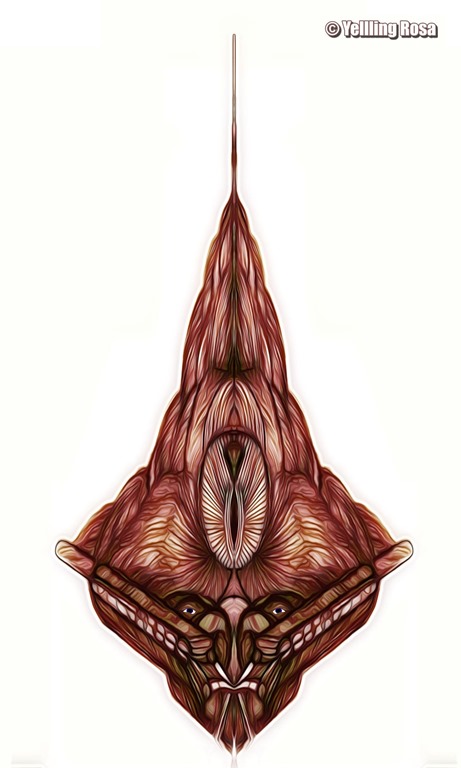
Translating poetry from one language to another is problematic. The most common phrases can have meanings in the source language that do not exist in the target language. It is possible to convey these meanings to a foreign language by using the associations of the target language. In this case, the poem runs away from the language that is a relatively new poem based on original ideas. I am faithful to the original text, and I hope you will get some idea of my thoughts thanks to my tones and illustrations.
If you like the video, please send this link https://youtu.be/Hsb5UaLYNQg to your friends. YouTube doesn’t account for the views outside its forum for some reasons. So, I hope that some of you can view the video on YouTube.
At the beginning of the ’90s, I saw a dream where the dying tree stopped me and asked me to console her. The first thing in the morning, when I still remembered my dream, I opened my recorder and sang the story on the tape by accompanying myself on the piano. After the instant music session, I made only a few corrections to the lyrics and added the intro, which also served as an interlude. I called the song ”Ystävä voisitko kasvonipyyhkiä”(My Friend Could You Wipe My Face).
In 1996 I made a Music Album, Hiljaisia lauluja (Tranquil Songs), with a Finnish musician and my good friend Jouni Juola.Because the theme of the album was “Perishableness ja calmness” Ystävä voisitko kasvoni pyyhkiä was like it has made for it. Jouni sang the songs on the album, but we played the instruments together. Also, Jouni’s songs are on the album. This autumn (2014), when I translated the lyrics into English, I omitted the words My Friend from the title. I published the video on 6/23, 2013.
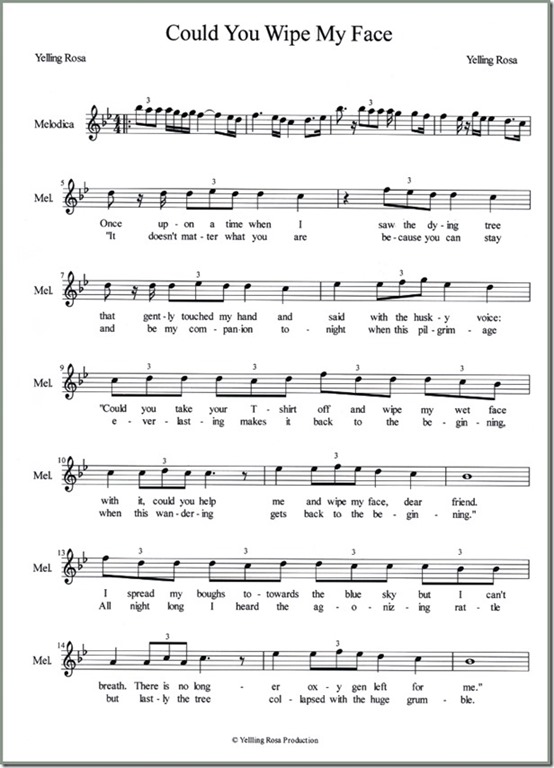
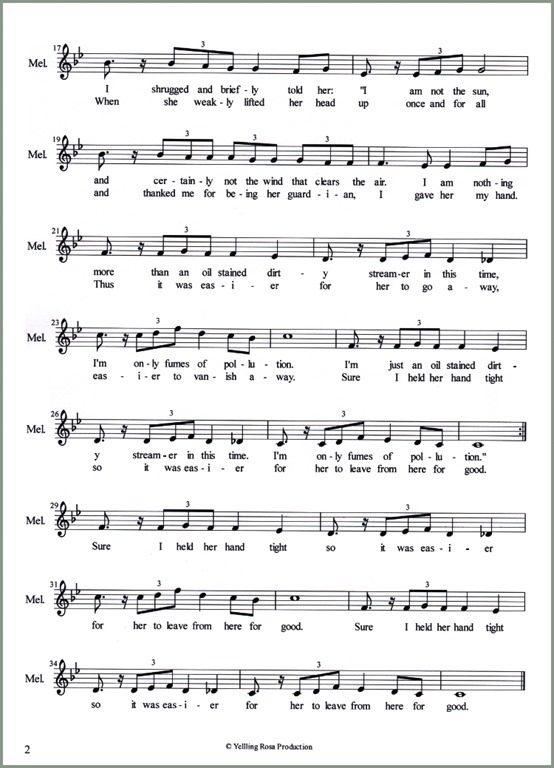
I included in this post both the lyrics and notes of the song. It takes more room on the screen, but I am sure those who like to follow notes will appreciate this effort. They don’t have to click on the other home page to see them.
Once upon a time, when I saw the dying tree
that gently touched my hand and said in a husky voice:
”Could you take your T-shirt off and wipe my wet face with it,
could you help me and wipe my face, dear friend?
I spread my boughs towards the blue sky, but I can’t breathe.
There is no longer oxygen left for me.”
I shrugged and briefly told her:
”I am not the sun and certainly not the wind that clears the air.”
I am nothing more than an oil-stained dirty streamer at this time.
I’m only fumes of pollution. I’m just an oil-stained dirty streamer at this time.
I’m only fumes of pollution.”
2
”It doesn’t matter what you are because you can stay
and be my companion tonight when this pilgrimage
everlasting makes it back to the beginning
when this wandering gets back to the beginning.”
All night long, I heard the agonizing rattle
but lastly, the tree collapsed with a huge grumble.
When she weakly lifted her head once and for all
and thanked me for being her guardian, I gave her my hand.
Thus, it was easier for her to go away,
easier to vanish away. Sure, I held her hand tight
so it was easier for her to leave from here for good.
Final
Sure, I held her hand tight so it was easier
for her to leave from here for good.
Sure, I held her hand tight so it was easier
for her to leave from here for good.
I hope you enjoy listening to this song and perhaps think how much nature needs gentle love from us to feel better and survive as long as the last human beings and even longer.
Odetta Holmes (December 31, 1930 – December 2, 2008), known as Odetta, was an American singer, actress, guitarist, lyricist, and civil rights activist, often referred to as ”The Voice of the Civil Rights Movement”.
Read more about Odetta at https://en.wikipedia.org/wiki/Odetta#Final_tour
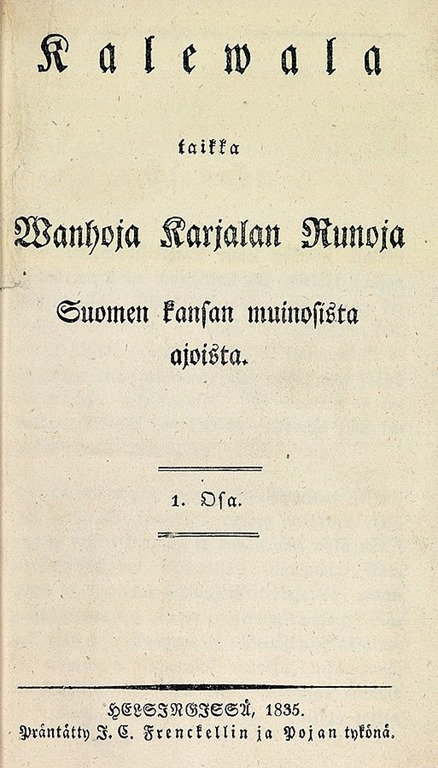
The first version of the Kalevala, called the Old Kalevala, was published in 1835, consisting of 12,078 verses. The version most commonly known today was first published in 1849 and consists of 22,795 verses, divided into fifty folk stories (Finnish: runot).[11] An abridged version, containing all fifty poems but just 9732 verses, was published in 1862.[12] In connection with the Kalevala, there is another much more lyrical collection of poems, also compiled by Lönnrot, called Kanteletar from 1840, which is mostly seen as a ”sister collection” of the Kalevala.[13]
”Kalevala melody” in old Finnish and English – Tania sings
Kun Mun Kultani Tulisi/Missing Him by Loituma off their 1998 album Things of Beauty. ”A love song from the Kanteletar published in 1802 already in French, English, German and Dutch. Goethe later made it famous under the name of ”Finnisches Lied”. In the middle of the 19th century a Swede by the name of C.G. Zetterqvist collected 467 translations of the poem in different languages, but they were never published.”
Tolkien and the Kalevala
Akseli Gallen-Kallela
From Wikipedia, the free encyclopedia
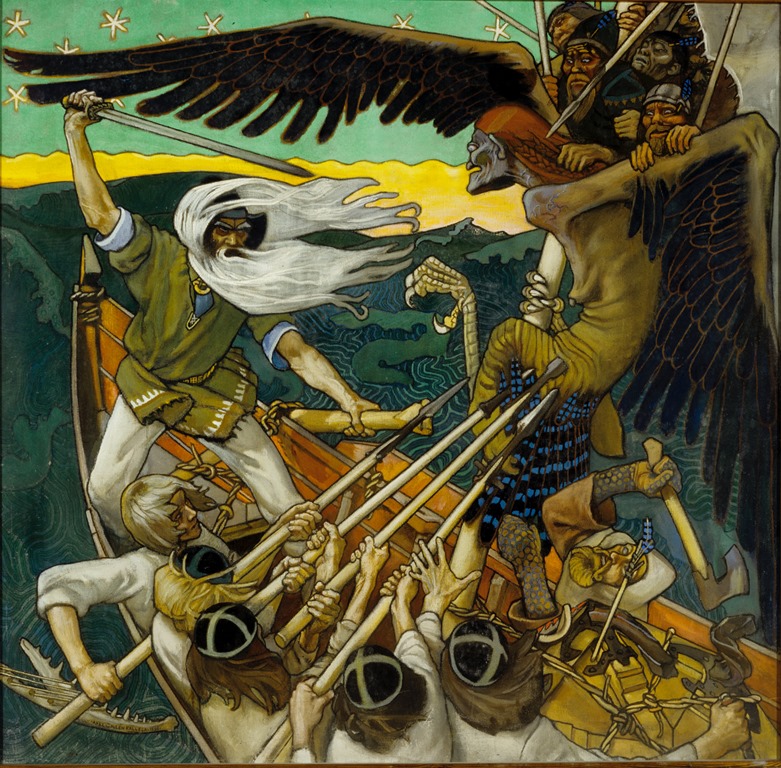
Akseli Gallen-Kallela (26 April 1865 – 7 March 1931) was a Finnish painter who is best known for his illustrations of the Kalevala, the Finnish national epic. His work is considered a very important aspect of the Finnish national identity. He changed his name from Gallén to Gallen-Kallela in 1907.[1]
The Defense of the Sampo (1896). Tempera on canvas, 125 × 122 cm (49.2 × 48 in). Turku Art Museum by Akseli Gallen-Kallela
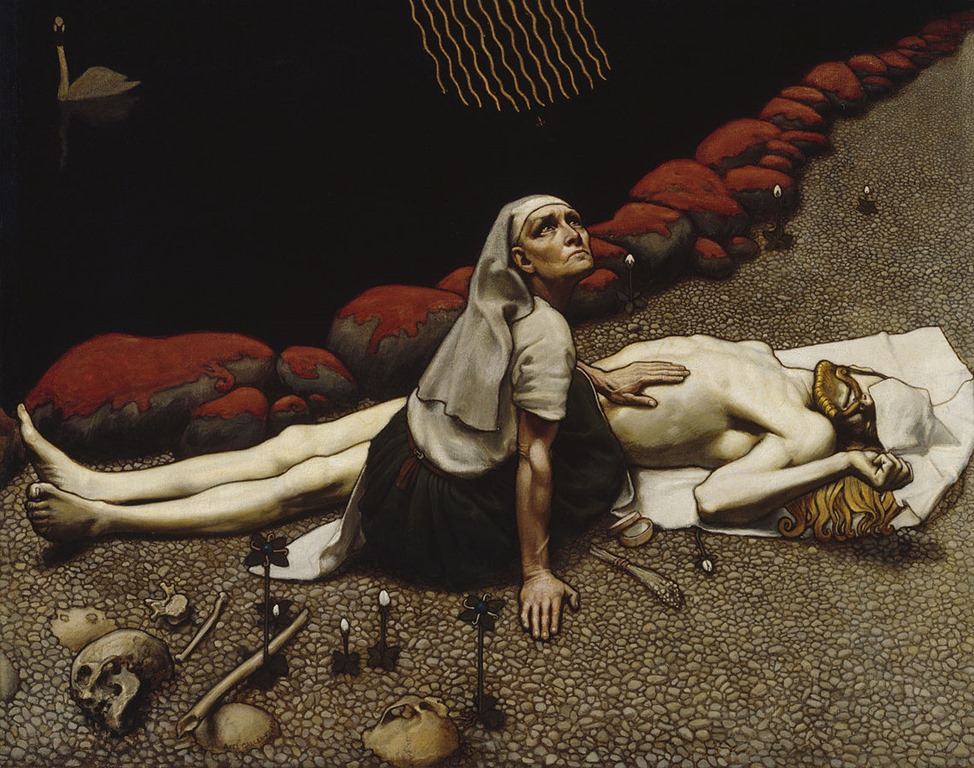
The Mother of Lemminkainen by Akseli Gallen-Kallela Please enlarge the drawings by clicking on them with the mouse cursor.
Jean Sibelius
From Simple English Wikipedia, the free encyclopedia
Jean Sibelius (born Hämeenlinna (Tavastehus) 8 December 1865; died Järvenpää, 20 September 1957) was a Finnishcomposer. He is one of the most famous people from Finland and one of the greatest composers of symphonies of all time. He was born at a time when Russia had a lot of power in Finland and the Finnish people were trying hard to keep their own culture and their independence. This nationalism can be heard in a lot of his music, especially some of the choral music. After 1928 he composed very little. He lived in retirement in his home in the Finnish countryside
The Kalevala: the Epic Poem of Finland (Crawford Translation) by Elias LÖNNROT Part 1/3
The Project Gutenberg eBook of Kalevala: the Epic Poem of Finland, by Elias Lönnrot
This eBook is for the use of anyone anywhere in the United States and most other parts of the world at no cost and with almost no restrictions whatsoever. You may copy it, give it away or re-use it under the terms of the Project Gutenberg License included with this eBook or online at www.gutenberg.org. If you are not located in the United States, you will have to check the laws of the country where you are located before using this eBook.