Three poems in Interlingua

This time I present you three of my poems translated in Interlingua, one of the many constructed languages. I have translated two of them and Stanley A. Mulaik1 has kindly translated one. He also helped me with two other poems. If they include any mistakes the blame falls on me. It is said that people who speak any of those Romance languages could understand Interlingua without difficulties and English speakers after a little while. I do hope that you don’t jump to the end of this post where I placed the English versions of my poems but try to understand on your own. Your comments are very welcome so that I could consider whether it’s a good idea to keep on studying Interlingua.

Un sonio que se realisa

Si le vita esseva un sonio
que se vermente realisa,
necuno necessitarea
fabulas con felice
finales.
© Yelling Rosa
14/11 –14

Poema

Un
poema es nihil
que on pote comprender
ma in toto
perciper con
le sensos.
© Yelling Rosa
27/6 –15

MULTES POTE DICER

Multes pote dicer que io es vacue
Proque io non face versos emotional
Del passion, le pelle e le corde de amor
Saltante felicemente de stagno a stagno
como un rana rosate e impatiente.
Mais al contrario: io es plen,
Plen del dolor que le romances
Non vide in iste mundo.
Si io scribeva un parola
De mi calide affaire de amor,
Io vomitarea le alimento,
a partir de mi ventre,
Un cosa que tote
De nos non pote facer.
© Per Yelling Rosa
© Traducite al interlingua per Stanley Mulaik

1 Read more about Stanley A. Mulaik here.
Further information on Interlingua:
Interlingua Grammar” by Alexander Gode and Hugh Blair, 1951. It’s free and you find it at: http://hg8lhs.ham.hu/languages/interlingua/Interlingua_Grammar.pdf

A Dream Come True

If life were a dream come true,
we wouldn’t need the fairy tales
with the happy endings.
© Yelling Rosa
14/11 -14

Poem

A
Poem is nothing
To be understood
But everything
To feel with
Senses.
© Yelling Rosa
27/6 -15

MANY MAY SAY

Many may say I am empty
Because I don’t draw emotional verses
Of passion, skin and the heart in love
Jumping happily from pond to pond
Like a pink and impatient frog.
But on the contrary: I am full,
Full of the pain that romances
Don’t see in this world.
If I wrote one word
Of my hot love affair
I’d vomit the food,
out of my belly,
A thing that all
Of us can’t do.
© Yelling Rosa
23/5 -15

Facebooktwitterlinkedinrss
Facebooktwitterredditpinterestlinkedinmail
Tallennettu kategorioihin In English, Kielet, Kielten tutkimista, Runous, Yhteiskunta, Yleinen | Kommentit pois päältä artikkelissa Three poems in Interlingua

Playing Shepherd

Playing Shepherd is a translation from a Finnish Folksong “Soittajapaimen”. Usually it is performed very vivacious and quite fast. It is a paradox because it is said in the song that the shepherd is playing when the night has fallen. How many of us start to jump like an electronic Duracell Bunny after being all day outdoors taking care of the cattle. I bet that even cows or sheep wouldn’t like that kind of the parties but instead prefer to sleep. In former days the pasture sometimes was located far a away from the farm house and the cattle spent time under the sky while the shepherd could have some kind of small and modest cottage or shelter. It was due to agriculture and when the cattle had eaten grass from the one field they were moved to the next spot.

This video is most of all an arrangement demonstration. It might sound a little bit academically because I don’t have a piano or cello at home and sounds are digital. Anyway, you will get the picture of Finnish folk which differs from Anglo-Saxon tradition as well from Slavic folk music. The music sheets of the song are at: http://www.yellingrosa.com/sheets01.htm#sheets02 On those notes you see the melody and accords.


Finnish Words:

Tein minä pillin pajupuusta,
toki vain pajupuusta.
;;Hei, soreasti, koreasti pillini soipi,
toki vain pajupuusta.;;

Metsässä soitan illan suussa,
toki vain illan suussa.
;;Hei, soreasti, koreasti pillini soipi,
toki vain illan suussa.;;

I hope you will enjoy yourself with this song.

Facebooktwitterlinkedinrss
Facebooktwitterredditpinterestlinkedinmail
Tallennettu kategorioihin In English, Juhlapäivät, Kirjallisuus, Musiikki, Runous, Yhteiskunta, Yleinen | Kommentit pois päältä artikkelissa Playing Shepherd

Ilman hyvää onnea

Ilman hyvää onnea
ei selviä edes
itsestään.
© Yelling Rosa
22/5 -15

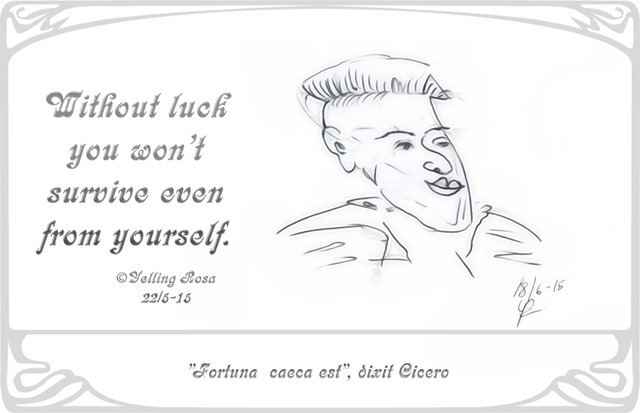
Without luck
You won’t survive
Even from yourself.
© Yelling Rosa
22/5 -15

001 Pystytukkamies 18.6.15 E004Smaller

Fortuna caeca est =
’Onnetar on sokea’ tai ‘Kohtalo on sokea’ (Fin)
’Fortune is blind’ or ‘Destiny is blind’ (UK)

Facebooktwitterlinkedinrss
Facebooktwitterredditpinterestlinkedinmail
Tallennettu kategorioihin Kielet, Kirjallisuus, Luonto, Musiikki, Runous, Yleinen | Kommentit pois päältä artikkelissa Ilman hyvää onnea

Happened in the Woods

It is not easy to be a man, when you can not be beautiful and poetic, fairy boy was crying behind the stone. Oh holy deer, you’re thinking like me even though we are different species, I answered. I would not have otherwise bothered to open my mouth, it said. Then we walked hand in hand along the pathway, but the beds are just for girls.
© Yelling Rosa
25/6 -15

Ei ole helppoa olla mies, kun ei saa olla kaunis ja runollinen, itki keijupoika kiven takana. Sinähän puhut minun suullani, vaikka olemme eri lajit, minä vastasin. Enpä olisi muuten viitsinyt suutani avata, se sanoi. Sitten kävelimme käsikkäin pitkin metsäpolkua, mutta sängyt ovat tytöille.
© Yelling Rosa
25/6 -15

This is supposed to be a Fairy Boy

A Fairy Boy by Yelling Rosa


Facebooktwitterlinkedinrss
Facebooktwitterredditpinterestlinkedinmail
Tallennettu kategorioihin In English, Kielet, Luonto, Runous, Yhteiskunta, Yleinen | Kommentit pois päältä artikkelissa Happened in the Woods

Avoin kirje maailmanmestari Eva Wahlströmille

Katsoin 30.5.2015 ohjelman, jossa olit Efter Nio -ohjelmassa Bettinan vieraana. Inhimilliset ajatuksesi loivat uskoa siihen, että meillä ihmisillä on sittenkin toivoa. Se edellyttää kuitenkin oikeiden ihmisten rohkeaa esiintymistä, jotta harhakäsitykset ihmisyydestä ja yksilön mahdollisuuksista saataisiin poistettua. Sinä, joka olet kokenut monia takaiskuja, osaat todennäköisesti asettua muiden ihmisten saappaisiin, ja ymmärrät, että viime kädessä kukaan ei voi olla itseään parempi ja että parhaimmillaankin kaikki on viime kädessä kiinni onnesta, joka jakautuu epätasaisesti ihmisten kesken. Ihmisten elämän valttikortit ovat kovin kirjavat, eikä lujinkaan tahto aina muuta huonoja kortteja paremmaksi.

Jos onni olisi jättänyt sinut saatuasi keuhkoveritulpat, et enää ikinä olisi nyrkkeillyt. Se, että onni oli tuolloin myöten, on puhtaasti asia, jonka olemassaoloon et voinut vaikuttaa. Tajuat varmasti tämän, kun mietit isääsi, jota positiivisempaa ja reilumpaa ihmistä saa puheittesi mukaan etsiä, mutta silti sairaus hänet mursi ja vei hautaan. Isäsi sanoi, jos oikein muistan äitisi sanat, ettei hän (isäsi) voinut kuolla, koska kuka hänen klaanistaan pitäisi huolta. Hänen klaaniinsa kuului perhe ja perheenjäsenten ystävät, ehkä paljon muitakin. Vähänkin elämää nähneet ja sydämensä avoinna pitävät ihmiset tajuavat, että he eivät voi olla kuin kiitollisia kaikesta hyvästä, mitä ovat saaneet, eikä se anna aihetta luulla itseään muita paremmaksi.

Nyt maailmassa on kuitenkin vallalla hegemoninen voittajat ja häviäjät –ajattelu. Sen mukaan ihmiset, joilla menee huonosti, ovat itse syypäitä kohtaloonsa, eikä heitä sen vuoksi pidä auttaa tai edes ymmärtää. Tämä yksinkertaistaminen ei palvele kuin muutamaa prosenttia ihmiskunnan jäsenistä ja heitäkin vain taloudellisessa mielessä. Ihmisinä heistä ei tule parempia, kun he unohtavat lähimmäisenrakkauden ja antavat ihmisten elämän kurjistua silmiensä edessä. Vaikka muuta annetaan ymmärtää, kyse on pahan ja hyvän välisestä taistelusta, mikä ilmenee itsekkyyden ja rakkauden voimien mittelynä.

On menty jopa niin pitkälle, että poliitikot ja osa omistavasta luokasta niin Suomessa kuin muuallakin läntisissä talousmahdeissa esittää maailmanlaajuista taloustaantuman johtuvan korkeista sosiaalimenoista. Tätä mantraa on toistettu niin paljon, että jo kansan riveistä löytyy ihmisiä, jotka uskovat vahingolliseen ainekseen. Näin sosiaaliturvan ja palkkojen leikkaukset tuntuvat oikeudenmukaisilta, kun saadaanhan niillä kunnon ihmiset kunniaan ja lusmuille ei jätetä mitään. Manipulointi puree ja sillä saadaan suuri yleisö uskomaan mitä tahansa. Olivathan juutalaisetkin syypäitä Saksan lamaan ennen toista maailmasotaa, vaikka he muodostivat siellä itse asiassa taloudellisen toiminnan selkärannan.

Tämän hegemonian voi tiivistää Horatiuksen sanoihin: ” Semper avarus eget”, jonka WSOY:n suomi-latina-suomi –sanakirjan kääntää seuraavasti: ”Ahne kärsii aina puutetta.” On suuri virhe luulla tietyn ajattelutavan päästyä valtaan, että se todella lopettaisi tuloerojen kasvattamisen, kun talous on kilpailukykyinen. Ahneus on kekseliäs, koska se on kyltymätön. Tämä taloustilanne, minkä syistä tietysti ollaan eri mieltä, on seurausta globalisoitumisesta. Raha menee sinne missä työvoima on halvinta ja päätyyn sinne, missä verot ovat pienimmät. Oligarkialla ei ole pienintäkään halua tulla Suomeen näillä näkymin. Se on mahdollista vasta sitten, kun täällä on maailman alhaisin palkkataso ja pienimmät verot.

Tietysti saatat olla eri mieltä kanssani taloustaantuman syistä, mutta et varmaankaan siitä, että kanssaihmisistä on pidettävä huolta. Viime kädessä me emme voi olla kuin oman elämämme maailmanmestareita. Jos emme auta lähimmäisiämme, me emme ole ihmisiä. Tosin jotkut sanovat, että luonto osoittaa, kuinka turha aines hylätään. Tämä osoittaa vain sen, kuinka pitkälle ahneus on päässyt. Eivät eläimet jätä toisiaan siksi, että se olisi oikein tai väärin. Niillä ei ole vain keinoja selvitä luonnossa esimerkiksi loukkaantuneiden kanssa, koska heillä ei ole sairaaloita, sairaanhoitajia ja lääkäreitä. He eivät myöskään osaa kerätä veroja, joilla nämä toiminnot pidetään yllä.

Lopetan tämän vetoomukseni ihmisyyden puolesta Ciceron sanoihin: ”Inhumanitas omni aetate molesta est” (Inhumanity is troublesome in every generation). Minulla ei ole samanlaista julkisuusarvoa kuin sinulla, joten minun puheeni ihmisyyden perusperiaatteiden puolesta kaikuu äänenä korvessa. Siksi toivon, että joskus rivien välistä vihjaisisit ihmisyyden puolesta ahneutta vastaan. Samalla kehotan varovaisuuteen, koska kaikki eivät pidä ihmisyyden puolesta puhumisesta. Luotan ottelutaitoihisi ja tiedät milloin väistää ja milloin edetä, jotta kehässä asialle olisi enemmän hyötyä kuin haittaa.

Kiitos inhimillisestä esiintymisestäsi Bettinan vieraana

Kaikkea hyvää sinulle ja olkoon onni myötä elämässäsi

Tuntematon runoilija
Yelling Rosa

Facebooktwitterlinkedinrss
Facebooktwitterredditpinterestlinkedinmail
Tallennettu kategorioihin Kielet, Yhteiskunta, Yleinen | Kommentit pois päältä artikkelissa Avoin kirje maailmanmestari Eva Wahlströmille

Spanish Beat of the Heart Heels

I have life on the palm of my hand.
And when I had my first orgasm with
My beautiful animated Elizabeth.
I saw the look and soul of magic ball.
It’s the pain and pleasure all the same
But never hurt or greed or evil beams.
It’s dancing on the wood parquet
With metal heels and suddenly
Disappears.
© Yelling Rosa
26/5 –17

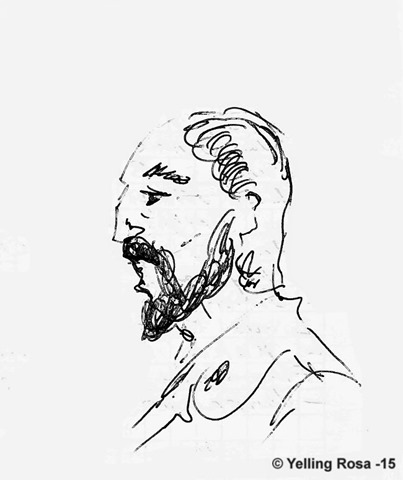
Den trötta mänskan, mindre

When this picture was on GooglePlus one of my readers said that he looks like Spanish, like Cervantes. Well, perhaps so, anyway the clank of hooves was also there where Don Quixote rode. In Spain I always feel the immediate presence of life and death and the rhythm of their combinations. I call it The Beat of the Heart Heels. I draw often when I am waiting that Windows Operating System maintances itself. This man just jump from my subconscious.

In Spanish poetry heels are mentioned often. If my observations has already used, I will chainge heels to needs. The Beat of the Heart Needs is also quite distinctive. 

Facebooktwitterlinkedinrss
Facebooktwitterredditpinterestlinkedinmail
Tallennettu kategorioihin In English, Kirjallisuus, Kuvataide, Musiikki, Runous, Yleinen | Kommentit pois päältä artikkelissa Spanish Beat of the Heart Heels

Loistava latinan kielen jäsentelijä

001 Latin E001

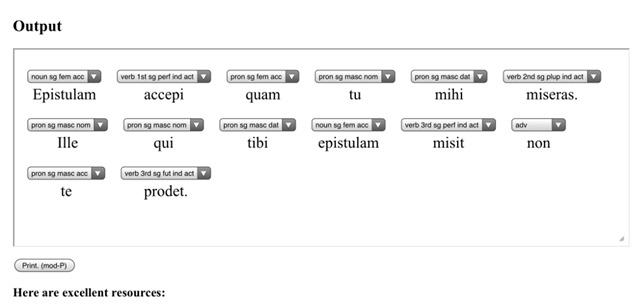
Tämä loistava työkalu löytyy osoitteesta: http://www.u.arizona.edu/~aversa/latin/

Sen avulla voi havainnollistaa oppimaansa. Ainoa varjopuoli jäsentelijässä on se, että sen kanssa on tiedettävä, mikä sijamuoto tai verbin taivutusmuoto on kyseessä. Painikkeiden vasemmassa reunassa on nuoli-ikoni, jota painamalla eri vaihtoehdot tulevat esille. Latinan kielessähän on se ongelma, että saman kirjoitusasun omaava sana voi olla esimerkiksi genetiivi tai datiivi, kuten I deklinaation substantiivit, esimerkkinä latinan kielen maa-sana: terra (nom.), terrae (gen. ja dat.). Toisaalta siinä sitten joutuu miettimään jäsentelyä.

Latinan kielen sanakirjoja löytyy paljon Internetissä, joiden avulla esimerkiksi tämän postin esimerkkilauseet voi kääntää. Yksi sellainen, Latin Word Study Tool, löytyy osoitteesta: http://www.perseus.tufts.edu/hopper/morph?l=amare&la=la Se myös jäsentelee kysytyn sanan.

Latina est gaudium et utilis!

Facebooktwitterlinkedinrss
Facebooktwitterredditpinterestlinkedinmail
Tallennettu kategorioihin Kielet, Tietotekniikka, Yleinen | Kommentit pois päältä artikkelissa Loistava latinan kielen jäsentelijä

The Finnish Language

According to Kalevi Wiik, emertus professor, Finland has been habitated since 9,000-8,000 BC, when the ice started to smell. The migration happened from west, south and east. People spoke different languages from Indo-European languages to Finno-Ugric languages. The modern Finnish has developed from the latter group of languages. Wiik gives many explanations why Finno-Ugric languages were the most succesful ones but the common sense tells us that the most of the people spoke it. They were the majority of the population from the very beginning or they achieved that status in some later point.

The original home of the Finno-Ugrian is in Russia on the west side of the Urals where Ugrian people lived before Russians. At present time the Finno-Ugric languages have circa 24 million speakers. The population decreases all the time particular in Russian. The Finno-Ugric languages are not Indo-Europian languages. The Finns and Hungarians are the biggest groups of the Finno-Ugrians even though Finnish and Hungarian differ from one another a lot. In common they both have many cases and they are agglutinative languages.

The table of case declension for the word Kirja with 1st person genitive singular suffix -ni

Nominative kirjani my book
Accusative kirjani my book
Genitive kirjani of my book
Essive kirjanani as my book
Partitive kirjaani (some of) my book
Translative kirjakseni (for) my book
Inessive kirjassani in my book
Elative kirjastani from my book
Illative kirjaani into my book
Adessive kirjallani on my book
Ablative kirjaltani from my book
Allative kirjalleni to my book
Abessive kirjattani without my book
Comitative kirjoineni with my book
Instuctive no personal pronoun form,
page 147, Finnish Grammar by Clemens Niemi, see the links at the end of this article

These translations don’t give the idea of the different nuances of these endings and they don’t  tell that the word order can be change in Finnish in order to emphasize some word without losing the main idea of the sentence.

In English you can say that A bird ate a worm but hardly that A worm ate a bird.

I Finnish you can say that Lintu söi madon. Then you only mention what had happened but if you say that Madon söi lintu you are concerned about the worm. Perhaps it was your best fishing bait of the day. Words agree with one another in cases and number.

Nominative singular of ”green book” is vihreä kirja
Genitive singular of ”of green book” is vihreän kirjan. But the possessive suffix is not repeated:
“of my green book” is vihreä kirjani.

In Finnish the syllables of the words change because of the consonant gradation which is taken part by letters k, p, t. It happens that words were easier to pronounce and write. Sometimes exceptions are just manners like in ”of my green book”.

I believe that by now everyone are convinced that it is impossible to translate Finnish into English word by word. I am telling this because I am often asked how I have a nerve to translate poems. Most times I don’t translate them at all. I do write my English poems in English in the first place. Sometimes I am very irritated because I don’t feel that I have a strong grasp of the language. What more I have learnt English less I know about it. On the other hand I have seen that even native speakers are sometimes lost with English. It has maimed itself by lopping off the cases and personal verb forms and substitutes them with articles and prepositional phrases. The logic of these idiomatical expressions are not always apparent for even natives. In the long run the English language get even more confused when it is spoken all over the world without the vigorous grammatical rules. The main meanings of the nouns are also inflamed, and this I heard from the English teacher long time ago. (She lives in Canada.)

I would use only Finnish if the digital translators could translate it better. Because of its many conjugations and cases the translation is messed up too much for English readers to make head or tail out of it. This is not case with Spanish or German bloggers as they can just add the translation buttons on their blog and it is settled. To show what I am talking about I add one of my Finnish poems here.

Runous

Runous
vastaamattomia
kysymyksiä tutkii,
hourailee siellä,
missä houretta ei ole.
Vesi liikkuu tynnyreissä,
joiden päällä on kansi.
Sitä ei silmä näe.
© Yelling Rosa
9/11 –14

Google Translation:

Poetry

Poetry unanswered
examines the issues,
delirious there,
what hour would not have.
The water moves in barrels,
covered with a lid.
It is not the eye can not see.
© Yelling Rosa
9/11 -14

Should be something like this:

Poetry

Poetry examines
The open questions.
It is hallucinating there
Where is no hallucinations.
The water is in the barrels
Under the lids. It is the eye
Which doesn’t see it.
© Yelling Rosa
9/11 -14

But as I said it is impossible translate poems from Finnish into English.

LINKS:
Read more about an agglutinative language:
http://en.wikipedia.org/wiki/Agglutinative_language

More about Kalevi Wiik Professor emeritus of phonetics at the University of Turku:
http://en.wikipedia.org/wiki/Kalevi_Wiik

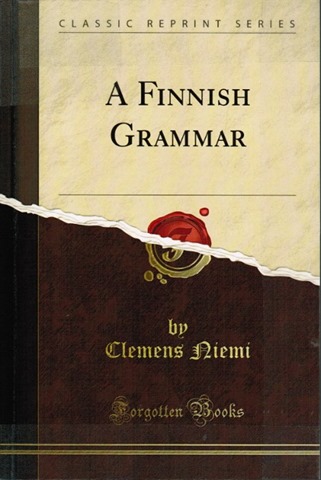
A Finnish Grammar by Clemens Niemi
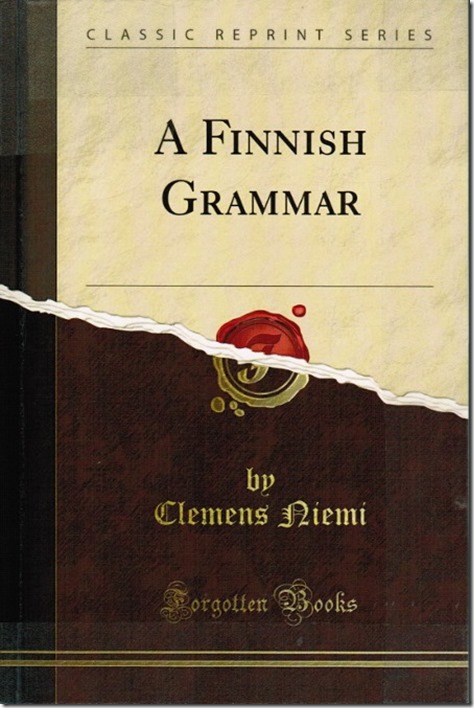
A Finnish Grammar by Clemens Niemi

PREFACE

In preparing this book my aim has not been to write a complete Finnish grammar. I have sought to present only the fundamental principles in the briefest possible way necessary for the study of the Finnish language. The student should thoroughly master the sound values of each letter before taking any advanced steps. In doing so he is able to acquire accuracy in pronunciation.

It should be remembered that Finnish, as its cognate Finno-Ugric languages, is an agglutinative language, that is to say, the words are formed of roots by adding certain suffixes or endings to the stem. In this process of appending, the changes of letters for euphony or harmony occur. The rules for these changes should be carefully observed in connection with each lesson as they come.

Each lesson consists of a statement of grammatical principles, a vocabulary, exercises, and in some cases, a brief reading lesson. The vocabulary at the head of the lesson will help the student to understand the sentences which follow. The exercises have been developed in such a way that each lesson brings out the grammatical principles at hand. The rules of syntax as well as grammatical questions have been scattered throughout a long series of lessons for the purpose of leading the student gradually to a thorough understanding of the rules. The case-endings and the use of the cases are particularly emphasized, as they form a very difficult and essential part in the study of the Finnish language. The reading lessons are so arranged as to give an early acquaintance with real Finnish, and they continually add new words to the student’s vocabulary.

Fully aware of many defects, I hope that this book, the only Finnish grammar of its kind in English, will be of some aid to the learner of the Finnish language.

I wish here, also, to express my indebtedness to my fellow teachers for their valuable help and suggestions which have aided me in perfecting this book.

CLEMENS NIEMI.

Suomi College, February, 1917.

You can get this book for free at:
https://www.forgottenbooks.com/en/books/AFinnishGrammar_10033415
When you sign up you can choose one ebook freely. After that you will be offered one free book a day.
I bought my paper copy on Amazon.com for 8 dollars price

PS Listen to my poems in English at: https://www.youtube.com/watch?v=xBfVvw9ZF2s

Facebooktwitterlinkedinrss
Facebooktwitterredditpinterestlinkedinmail
Tallennettu kategorioihin In English, Runous, Yleinen | Kommentit pois päältä artikkelissa The Finnish Language

Identical Quadruplets – Identtiset neloset


001 Identical Quadruplests 2012 - 20152

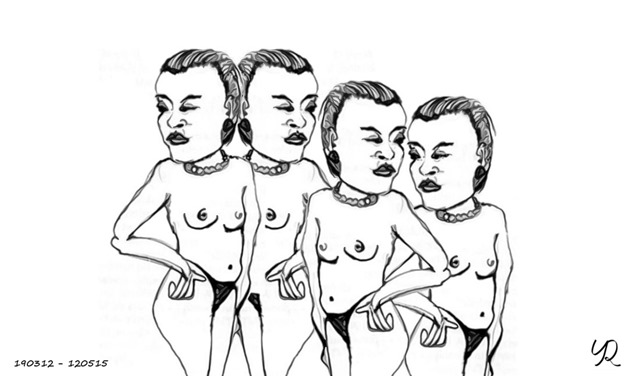
Piirsin tämän hahmon 19.03.12 ja olen nyttemmin huomannut, että siltä puuttui kolme sisarta. Joten ne oli lisättävä. Kuulakärkikynä piirustusta on editoitu Adoben Elements 10 – ja Gimp 2.8 –kuvankäsittelyohjelmissa.

I drew this figure in 19th March 2012. Later on I found out that she misses her three identical sisters. So I added them. I have edited this ballpoint pen drawing in Elements and Gimp photo editing softwares.

Facebooktwitterlinkedinrss
Facebooktwitterredditpinterestlinkedinmail
Tallennettu kategorioihin Kuvataide, Yleinen | Kommentit pois päältä artikkelissa Identical Quadruplets – Identtiset neloset

Vanha kunnon käynnistysvalikko Windows -kahdeksikkoon

Jos muistelet kaiholla vanhaa kunnon käynnistysvalikkoa, joka vielä Windows 7 -käyttöjärjestelmässä oli, sinulle löytyy ilmainen ratkaisu, jonka nimi on Start Menu 8. Löydät sen osoitteesta:

http://www.iobit.com/iobitstartmenu8.php

Start Menu 8 -ohjelman asentamisen jälkeen minun Win 8 -työpöytäni näyttää tältä. Käyttöjärjestelmä myös avautuu suoraan työpöydälle eikä laattanäkymään.

Työpöytä 8.1 kuin ennen

Toki Windows 10 -järjestelmään on lupailtu käynnistysvalikon palauttamista, mutta sen ilmestymiseen on vielä kuukausia, todennäköisesti yli puoli vuotta.

Muista aina tarkistaa kaikki omalle koneellesi lataamasi ohjelmat virustorjuntaohjelmalla ennen niiden asentamista. Ohjelmien ehdot, jopa kaupallisten, ovat nykyään niin tiukat, että vahingon sattuessa käyttäjä ei saa mistään korvauksia.

Tunnen monia ihmisiä, jotka ovat asentaneet Start Menu 8 ohjelman, eikä mitään ongelmia ole ollut. Kuitenkin, kun kyse on tietotekniikasta, mitä tahansa voi sattua. Jos ohjelma ei toimi, ota se vain yksinkertaisesti pois ohjelmapaneelin Poista ohjelma -toiminnolla. Konsultointiin aikani ei riitä.

Ihanaa kesän odotusta!

Facebooktwitterlinkedinrss
Facebooktwitterredditpinterestlinkedinmail
Tallennettu kategorioihin Tietotekniikka, Yleinen | Kommentit pois päältä artikkelissa Vanha kunnon käynnistysvalikko Windows -kahdeksikkoon